
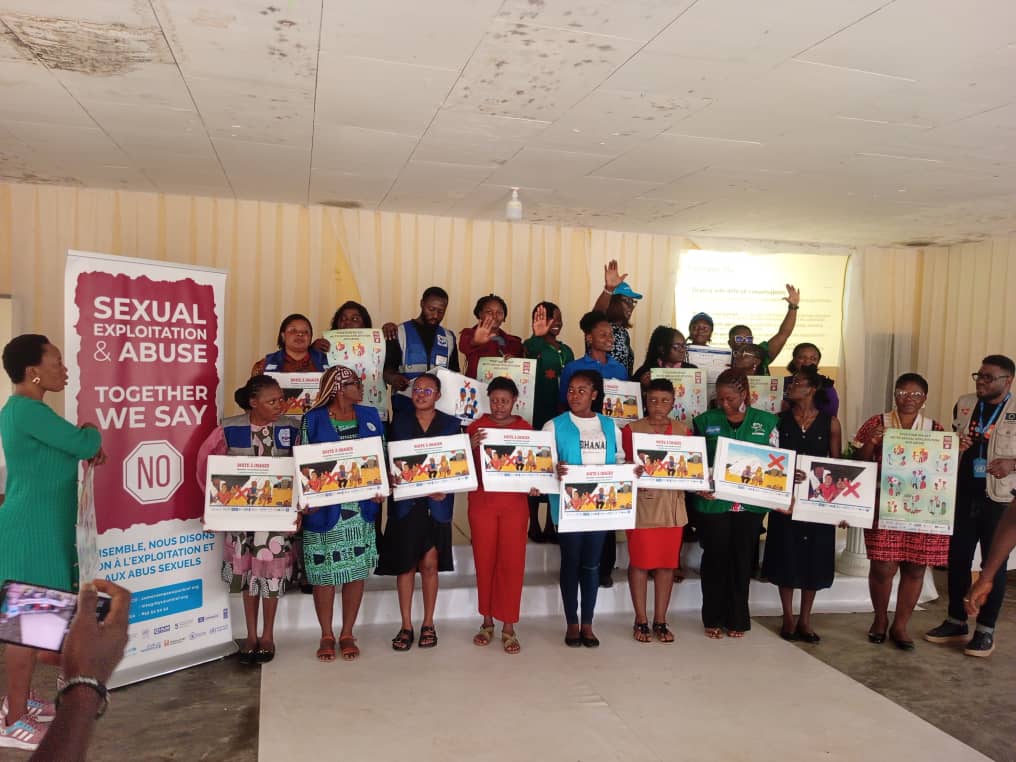
HUMFRIEH’s participation in the UNICEF PSEA workshop
On 14 November 2025, HUMFRIEH participated in a Prevention of Sexual Exploitation and Abuse (PSEA) workshop organized by UNICEF at the Women and Family Empowerment Center in Buea‑Town, Buea. The training brought together representatives from UNICEF, the Ministry of Women’s Empowerment and the Family (MINPROF), UNFPA, and volunteers from various humanitarian and development organizations, both online and in person, to strengthen their understanding of sexual exploitation and abuse, codes of conduct, and the principle of zero tolerance.
Throughout the day, HUMFRIEH volunteers engaged in interactive sessions that broke down what sexual exploitation and abuse are in practical terms, using real‑life examples drawn from humanitarian and community settings. They explored the sexual exploitation and abuse meaning beyond legal definitions, discussing how unequal power, poverty, and crisis situations can create conditions where survivors feel unable to say “no” or to report what has happened.
Facilitators guided participants through case studies on boundary‑setting, safe communication with beneficiaries, and the responsibilities of staff and volunteers when a concern or allegation arises. HUMFRIEH’s team had the opportunity to ask questions, reflect on situations they might face in the field, and identify changes they want to make in their own behavior and program design to support the prevention of sexual exploitation and abuse.
Understanding sexual exploitation and abuse

In humanitarian work, sexual exploitation and abuse (SEA) happen when someone in a position of power such as an aid worker, volunteer, or contractor uses that power to seek sexual favors or commits unwanted sexual acts against people who depend on assistance. SEA includes situations where sexual activity is exchanged for food, jobs, shelter, grades, or protection, as well as any sexual activity with a child under 18, regardless of local consent laws.
This behavior is never “private” or “mutual”; it is an abuse of power and a serious violation of human rights and humanitarian principles. Explaining clearly what is sexual exploitation and abuse and the sexual exploitation and abuse meaning in simple language helps communities and volunteers name the problem, recognize red flags, and know that this conduct is forbidden under all circumstances.
Why this PSEA workshop matters for HUMFRIEH


The UNICEF PSEA workshop held on 14 November 2025 at the Women and Family Empowerment Center in Buea‑Town brought together representatives from UNICEF, MINPROF, UNFPA, and volunteers from different organizations, both online and on site. In this space, HUMFRIEH volunteers deepened their understanding of the standards and expectations around PSEA, including the code of conduct and the principle of zero tolerance.
For HUMFRIEH, this activity is more than “just a training”: it is a strategic step that aligns the organization with international safeguarding benchmarks and demonstrates to partners, donors, and communities that HUMFRIEH takes survivor protection seriously. By engaging in such inter‑agency learning spaces, HUMFRIEH builds credibility as a reliable actor for prevention of sexual exploitation and abuse in the South‑West Region and beyond.
What HUMFRIEH Volunteers Learned About Codes of Conduct and Zero Tolerance

One of the most important parts of the workshop focused on codes of conduct and what a real zero‑tolerance approach looks like in practice. HUMFRIEH volunteers learned that a code of conduct is not just a document to sign; it is a personal commitment to specific standards that apply at all times, including during fieldwork, at the office and online.
Key lessons included the absolute prohibition of any sexual activity with anyone under 18, regardless of local norms, and the ban on exchanging assistance, jobs, grades or any kind of benefit for sex or sexual favors. Volunteers also discussed the obligation to report suspicions or concerns about sexual exploitation and abuse, even when they are not yet sure of all the details, so that survivors can be protected and patterns of abuse can be stopped early.
These discussions helped HUMFRIEH’s team understand that PSEA prevention of sexual exploitation and abuse is not only about avoiding wrongdoing themselves, but also about taking action if they see or hear of abuse by others. This shared commitment to “see it, say it and stop it” is now at the heart of HUMFRIEH’s internal safeguarding culture.
How HUMFRIEH Will Apply PSEA Principles in Our Programs
After the workshop, HUMFRIEH began transforming these lessons into concrete actions across its programs. The first step is to strengthen internal policies so that every staff member, volunteer and partner clearly understands their responsibilities and the consequences of misconduct.
HUMFRIEH is working to update and simplify its PSEA policy and code of conduct, ensuring that they reflect international standards while remaining easy to understand in the local context. New team members will receive an orientation that includes prevention of sexual exploitation and abuse as a core module, and existing staff will take part in regular refresher sessions using examples from their own work in Buea and surrounding communities.
At program level, HUMFRIEH is reviewing how activities are organized—for example, ensuring that private spaces are used appropriately, that outreach is done in pairs where possible, and that distribution processes are transparent and fair. These simple adjustments reduce the opportunities for abuse of power and make it easier for community members to see that HUMFRIEH is serious about safeguarding.
Protecting Our Communities: Rights, Reporting and Support

A key message from the workshop is that communities must know their rights if PSEA is to be effective. HUMFRIEH is integrating clear safeguarding messages into health talks, youth sessions and community dialogues so that people understand what sexual exploitation and abuse looks like and that it is never their fault.
Information materials at HUMFRIEH activities and offices will explain, in simple terms and local languages, that all services are free and must never be exchanged for sex or personal favors. They will also indicate how to raise a concern safely, whether through a trusted focal person, a dedicated phone number or a confidential feedback channel.
When someone reports abuse or exploitation, HUMFRIEH aims to respond in a survivor‑centred way: listening without judgment, respecting the person’s choices and linking them with appropriate medical, psychosocial or legal support. In this way, the organization’s commitment to the prevention of sexual exploitation and abuse is experienced not only as words but as real, compassionate action.
How You Can Get Involved in PSEA With HUMFRIEH
Everyone has a role to play in the prevention of sexual exploitation and abuse, and HUMFRIEH invites community members, youth and professionals to join this safeguarding journey. You can get involved by attending our awareness sessions, inviting HUMFRIEH to speak in your school, church, mosque or community group, or volunteering as a peer educator committed to our code of conduct.
If you are reading this online, you can also support by sharing this article, following HUMFRIEH on social media and subscribing to our updates, so that more people understand what is sexual exploitation and abuse and how to report it safely. Your voice and action help create an environment where survivors are believed, abuse is reported and communities stand together against all forms of exploitation.
Partner With HUMFRIEH to Strengthen Safeguarding
HUMFRIEH is open to partnerships with organizations that want to reinforce their own safeguarding and PSEA systems. Schools, health facilities, youth groups, women’s associations, faith communities and local businesses can collaborate with HUMFRIEH to co‑host trainings, develop simple codes of conduct and establish clear referral pathways for survivors.
If your institution or organization would like to work with us on PSEA prevention of sexual exploitation and abuse whether through joint activities, technical support or financial contributions please contact HUMFRIEH through our website or office in Buea. Together, we can build safer spaces where every person is treated with dignity and protected from sexual exploitation and abuse.